The Sacred Altar
the altar call
What Is The Altar
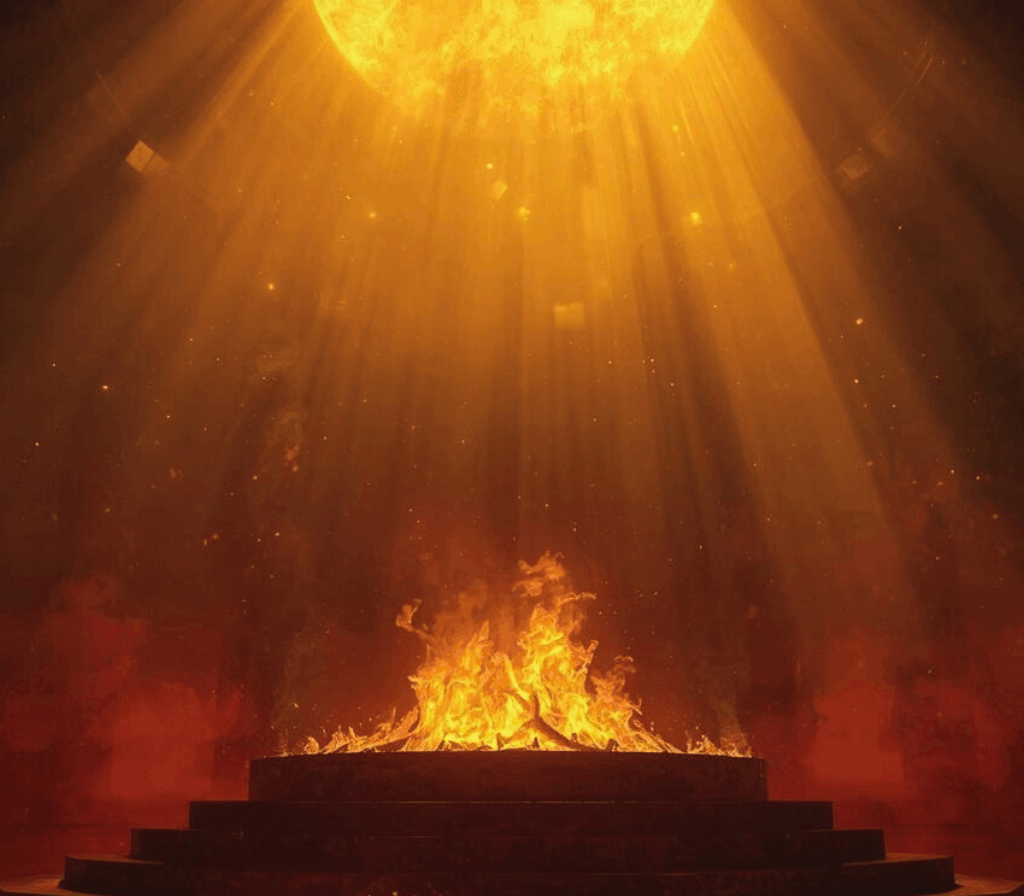
The altar, as revealed in the Torah, is a sacred place where man meets with the Most High. It is not merely a structure of stone or earth, but a divinely appointed point of contact between heaven and earth—where obedience, sacrifice, repentance, and covenant are made manifest before Yahuwah.
From the beginning, the altar is tied to approach. In the book of Exodus, Yahuwah gives clear instruction that an altar is to be made of earth or uncut stones, showing that what is offered to Him must remain pure and untouched by human pride or invention. The altar was never to be elevated by human craftsmanship, because it is Yahuwah who sanctifies it—not man. This teaches that the altar is founded on humility and obedience, not human glory.
The altar is also the place of sacrifice. In the Torah, sacrifices were brought upon the altar as offerings unto Yahuwah—burnt offerings, peace offerings, sin offerings—each representing a form of surrender. The fire upon the altar consumed what was given, symbolizing that what is offered must be wholly yielded. Nothing held back. The altar, therefore, becomes a place where man lays down his will, his sin, and even his best possessions before Yahuwah in complete submission.
But the altar is more than sacrifice—it is covenant. When Noah came out of the ark, he built an altar and offered clean animals, and Yahuwah responded with a covenant promise. When Abraham was commanded to offer Isaac, he built an altar in obedience, demonstrating faith and fear of Yahuwah. In these moments, the altar becomes a witness—a testimony that man is entering into agreement with the Most High through obedience. The altar seals moments of divine encounter and commitment.
The altar is also a place of remembrance. In the Torah, altars were built not only for offerings but as memorials of Yahuwah’s dealings with His people. They marked places where Yahuwah appeared, spoke, delivered, or made promises. The altar stood as a physical reminder that Yahuwah had intervened in the lives of His people and that His word endures.
In addition, the altar represents atonement. Through the shedding of blood upon the altar, atonement was made for sin. The Torah teaches that life is in the blood, and it is the blood upon the altar that makes reconciliation. This reveals that the altar is a place where sin is not ignored but dealt with according to Yahuwah’s instruction. It is where justice and mercy meet.
The altar is also governed by order. Yahuwah gave precise instructions regarding how it should be built, how the fire should be kept, and how offerings should be presented. This shows that the altar is not a place of disorder or human expression, but of divine order and reverence. It requires obedience in every detail, teaching that approaching Yahuwah must be done according to His word, not our feelings.
Ultimately, the altar in the Torah is the place of drawing near. It is where man humbles himself, where sin is acknowledged and covered, where covenant is established, and where Yahuwah’s presence is honored. It is a place of surrender, a place of transformation, and a place where the relationship between Yahuwah and His people is actively lived out.
The altar is not just something that was built—it is something that reveals the condition of the heart. For what is brought to the altar, and how it is brought, reflects whether a man walks in obedience or rebellion before Yahuwah. (Obedience is the sacrifice)
The Purpose of The Altar Today
The altar, as revealed in the Torah, has always been a place where man comes before Yahuwah in humility, surrender, and reverence. Though in ancient times offerings of blood were brought upon the altar according to His command, the deeper truth established from the beginning was never the sacrifice itself—it was the obedience behind it.
Even in the Torah, Yahuwah made it clear that the act of offering meant nothing if the heart was not aligned with His will. The altar was never intended to become a substitute for righteousness. A man could bring an offering, but if he walked in disobedience, that offering held no true value before the Most High. What Yahuwah desired was not merely what was placed on the altar, but the posture of the one who approached it.
Today, though there is no blood sacrifice, the altar still stands in its true purpose. It remains the place where man comes to yield himself fully to Yahuwah. What is offered now is not the blood of animals, but a life of obedience. 1 Samuel 15:22. The same principle that governed the altar in the Torah continues unchanged—what Yahuwah requires has always been faithfulness to His word.
The altar teaches us that worship is not proven by outward acts alone, but by a life that follows His commandments. Every act of true worship flows from obedience. To come before Yahuwah while rejecting His instructions is to misunderstand the very purpose of the altar itself.
It has always been, and it will always be this truth: obedience is greater than sacrifice. The altar is not where we replace obedience—it is where we demonstrate it. Halleluyah!
Restoring What Was Lost
“Restoring What Was Lost” begins with understanding that nothing Yahuwah established in the Torah was ever meant to fade away—it was man who drifted, not the command. From the beginning, Yahuwah gave His people His laws, His order, and His way of life, so that they would walk in righteousness and remain in covenant with Him. What was lost, therefore, was not the truth itself, but man’s alignment with it.
In the Torah, when Israel turned away—whether through disobedience, idolatry, or neglect of the commandments—there was always a call to return. "Restoration was never presented as something new, but as a return to what was already given". Yahuwah continually called His people back to His statutes, back to His ways, back to obedience. This is the foundation of restoration: not invention, but return.
What was lost includes the fear of Yahuwah, the commitment to His commandments, and the understanding of covenant. Over time, these things were replaced with traditions, personal desires, and altered forms of worship. But the Torah shows that Yahuwah does not change, and neither does what He requires. His standard remains the same, waiting for His people to come back into alignment with it.
Restoration, then, is a turning of the heart. It is repentance in its truest form—not just words, but a realignment of one’s life with the commandments of Yahuwah. It is choosing obedience where there was once compromise, choosing truth where there was once confusion, and choosing covenant where there was once distance.
The altar plays a role in this restoration, not as a place of repeated sacrifice, but as a place of surrender. It is where a man lays down what he has become and returns to what Yahuwah originally intended. It is where the heart is corrected, and where commitment is renewed. The outward form may look different today, but the inward requirement remains unchanged.
To restore what was lost is to walk again in the paths that were established from the beginning. It is to remember that Yahuwah’s instructions were never temporary, but eternal. It is to rebuild what was broken—not with new ideas, but with the same obedience that was always required.
Restoration is not about going forward into something unfamiliar; it is about returning to what was always true. It is the call to come back, to realign, and to live once again according to the word of Yahuwah as it was given from the beginning. Chronicles 7:14
The Fire Of Yahuwah Still falls
Return to Yahuwah today. Do not harden your heart or delay His call. For it is written, “If you will return, O Israel, says Yahuwah, return unto Me” (Jeremiah 4:1). Though we have gone astray, His mercy still calls us back to His covenant.
Yahuwah has already shown us the way of restoration: “If My people… will humble themselves, and pray, and seek My face, and turn from their wicked ways; then will I hear from heaven, and will forgive their sin” (2 Chronicles 7:14). The call is clear—return, repent, and walk again in His commandments.
Come to the altar—not with sacrifice, but with obedience. Lay down your will, your ways, and your disobedience before Him. For Yahuwah desires that we walk in His statutes and keep His judgments (Deuteronomy 5:33).
Choose life today, as it is written: “I have set before you life and death… therefore choose life, that both you and your seed may live” (Deuteronomy 30:19).
I returned and saw under the sun, that the race is not to the swift, nor the battle to the strong, neither yet bread to the wise, nor yet riches to men of understanding, nor yet favor to men of skill; but time and chance happeneth to them all. Ecclesiastes 9:11
Office Hours:
Address:
Email:
Phone#:
Error: Contact form not found.
Visit Locations:
Jamaica
Ghana
Brazil
ABOUT
Ministry Vision Mission
Pastor Mark
Locations
Tithes
Q&A
Error: Contact form not found.