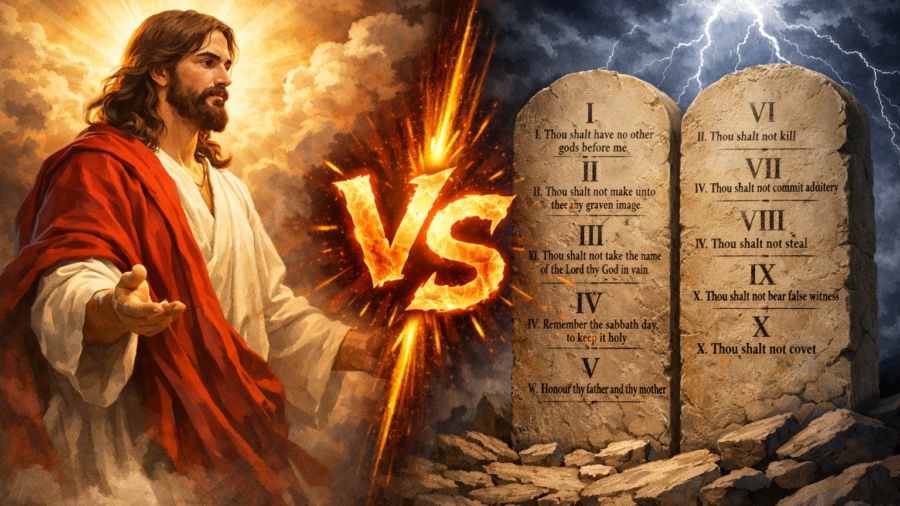
Did Jesus Fulfill All Three?
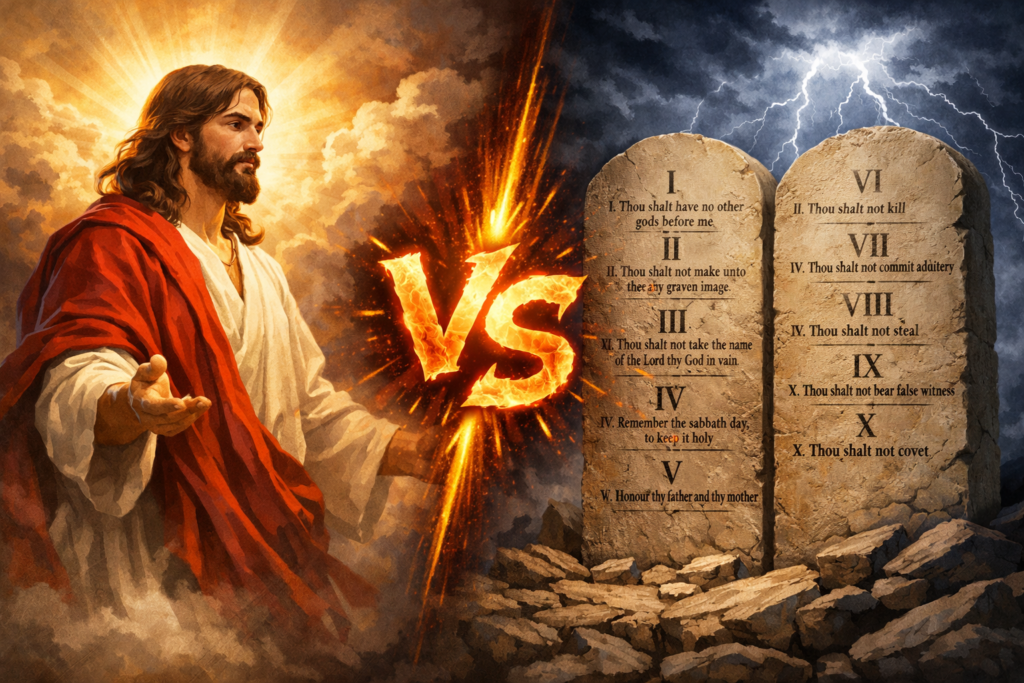
A Deep Study into the Lamb, the Law, and the Gospels
Introduction — We Must Begin Where Truth Begins
For centuries, millions have been taught a single phrase without ever being encouraged to test it: “Jesus fulfilled the Law.” That statement is repeated so often that it is rarely questioned, and yet Scripture itself commands us to examine, test, and prove all things.
The greatest problem with modern teaching is not devotion—it is order. People are taught to start with the Gospels and then reinterpret the Torah through them. But Scripture never instructs us to do that. Truth does not begin in Matthew. Truth begins with the Most High God and His Law.
If Jesus is claimed to be the Lamb of God, the final sacrifice, and the fulfillment of the Law, then the only honest approach is this:
What did the Law actually require?
And once we know that, do the Gospel accounts align with it?
This study does not attack belief. It tests claims—using the very standard Yahuwah Himself established.
Part One: Understanding the Lamb — What the Torah Requires
Before a single word of the Gospels is considered, the Torah lays down exact, non-negotiable instructions for sacrificial offerings. These are not symbolic guidelines. They are precise commands given by the Almighty.
One of the most repeated requirements is that a sacrificial offering must be “without blemish.” This phrase is often spiritualized in later theology, but the Torah never treats it that way.
According to standard definitions, a blemish is any defect, flaw, or imperfection—something that mars wholeness. Strong’s Concordance defines the Hebrew word tamim as complete, sound, whole, and unimpaired, free from both physical and moral defect. The Zondervan Bible Dictionary confirms that any physical abnormality disqualified an animal or a priest from sacrificial service.
The requirement is simple and uncompromising:
If there is a defect, the offering is rejected.
This matters because the entire sacrificial system stands or falls on obedience. A blemished lamb does not produce partial atonement—it produces no atonement at all. The system does not bend for emotion, intention, or later interpretation.
So the central question must be asked plainly:
Did Jesus meet the Torah’s requirements?
Part Two: What the Law Demands of a Sin Offering
The Torah does not leave the matter of sin offerings vague. It spells out the process carefully. A valid offering requires specific actions, specific handling of blood, and specific consumption of the sacrifice.
The lamb must be slaughtered in accordance with the Law. Its bones must not be broken. Its blood must be handled by a priest and sprinkled toward the sanctuary, either on the altar or before the veil. The meat of the offering must be eaten according to the instructions given. Blood must never be consumed, as Yahuwah explicitly forbids it under penalty of death. And above all, the Torah warns against shedding innocent blood for the guilty, declaring such an act a violation of God’s justice.
There is also a detail often overlooked: for common people, the sin offering prescribed in Leviticus is a female lamb.
These instructions form the baseline. They are not optional. Any claim that Jesus fulfilled the Law must be measured against these exact requirements—not later theology, not creeds, and not symbolic reinterpretation.
Part Three: Comparing the Gospels to the Torah
Once the Torah’s requirements are clearly established, the Gospels must be examined honestly and carefully.
All four Gospel accounts describe Jesus being beaten, scourged, bloodied, pierced, and wounded. According to the Torah’s own definition, these are blemishes. A lamb bearing such defects would never be accepted at the altar. The Law does not recognize “spiritual perfection” as a substitute for physical wholeness in a sacrifice.
The Torah also requires that blood be sprinkled by a priest in a specific, sacred context. Yet none of the Gospels record a priest sprinkling Jesus’ blood, nor do they place this act at the altar or before the veil. The requirement is entirely absent.
John alone claims that Jesus’ bones were not broken, yet Matthew, Mark, and Luke make no mention of this critical detail. The Torah requires two or three witnesses to establish a matter. One Gospel asserting compliance does not satisfy the Law’s standard.
Even more problematic is the matter of consumption. The Torah commands that the meat of the offering be eaten. All four Gospels agree that Jesus’ body was not eaten; it was placed in a tomb. This alone disqualifies the offering according to the Law.
At the same time, the Gospels record Jesus instructing his followers to drink his blood—symbolically or otherwise. This instruction directly contradicts the Torah, which repeatedly forbids consuming blood, declaring that life is in the blood and that anyone who eats it will be cut off.
Finally, the Torah strictly forbids shedding innocent blood. Yet the Gospels consistently declare Jesus innocent while simultaneously celebrating his execution as redemptive. This stands in direct conflict with Exodus 23:7, where Yahuwah commands His people not to kill the innocent or righteous.
Major Observations That Cannot Be Ignored
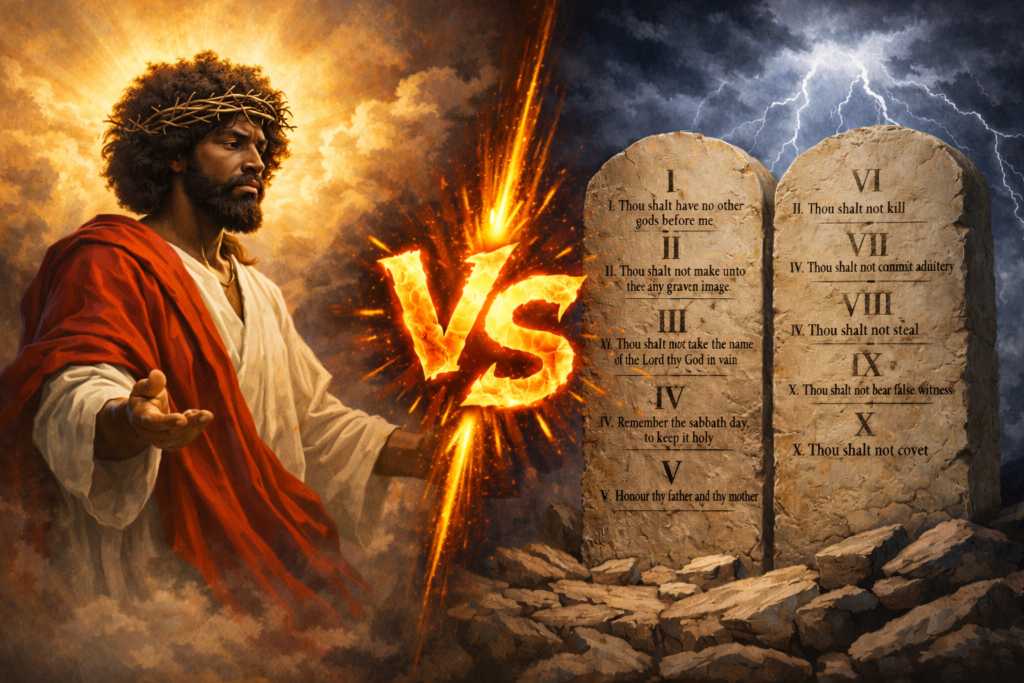
The Gospel accounts do not present a unified, consistent narrative. They differ on the timing of events, Jesus’ final words, the details of the resurrection, the number of angels at the tomb, and even the nature of the Passover meal. For an offering as serious as a sin sacrifice, inconsistency is not a minor issue—it is disqualifying.
More importantly, when measured against the Torah, none of the four Gospels consistently align with the Law’s requirements for a sin offering or a Passover lamb.
This raises an even deeper truth that is often forgotten: salvation did not begin in the New Testament.
Adam received mercy.
Noah found grace.
Abraham was justified.
Israel was forgiven.
David repented and was restored.
The prophets repeatedly called the nation back to repentance and obedience.
And Yahuwah Himself declares, “I, even I, am He who blots out your transgressions for My own sake.”
Grace was never absent from the Torah. Forgiveness never required a man to replace the Law of God.
Conclusion — The Law Still Stands
When the Torah is examined first, as it must be, and the Gospels are tested against it, one conclusion emerges clearly and consistently:
Jesus does not meet the Torah’s requirements for a sin offering or the Passover lamb.
The Most High has always been the Savior, and beside Him there is none else. His Law has never changed, and repentance and obedience have always been the path to forgiveness.
The Torah does not bend to later doctrine.
It does not adjust to creeds.
And it does not surrender its authority.
The Law stands.
And in standing, it exposes the truth.