ChatGPT Image Jan 22, 2026, 01_15_51 PM

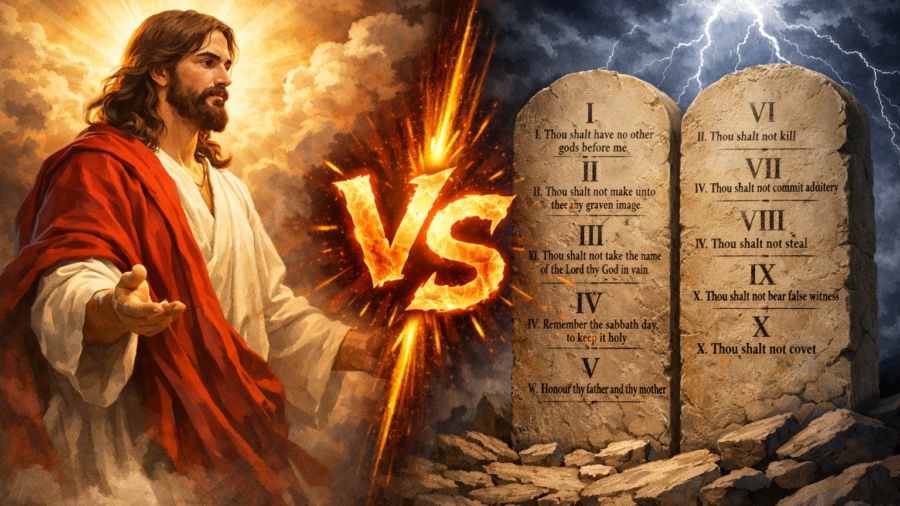
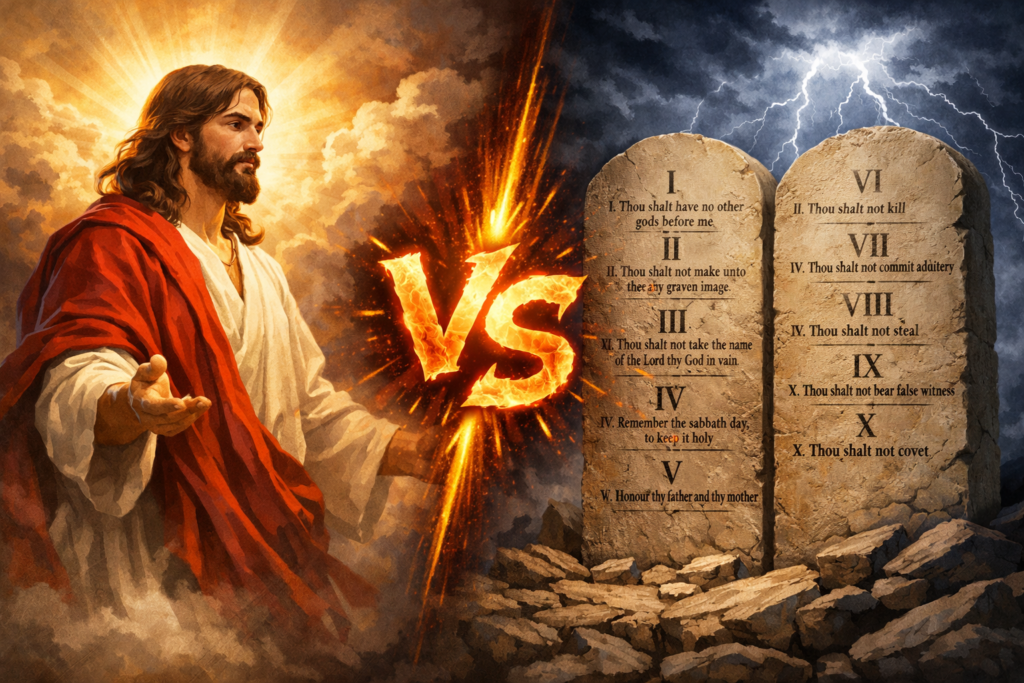
Jesus and The Laws Of God

Did Jesus Fulfill All Three?

A Deep Study into the Lamb, the Law, and the Gospels

Introduction — We Must Begin Where Truth Begins

For centuries, millions have been taught a single phrase without ever being encouraged to test it: “Jesus fulfilled the Law.” That statement is repeated so often that it is rarely questioned, and yet Scripture itself commands us to examine, test, and prove all things.

The greatest problem with modern teaching is not devotion—it is order. People are taught to start with the Gospels and then reinterpret the Torah through them. But Scripture never instructs us to do that. Truth does not begin in Matthew. Truth begins with the Most High God and His Law.

If Jesus is claimed to be the Lamb of God, the final sacrifice, and the fulfillment of the Law, then the only honest approach is this:
What did the Law actually require?
And once we know that, do the Gospel accounts align with it?

This study does not attack belief. It tests claims—using the very standard Yahuwah Himself established.


Part One: Understanding the Lamb — What the Torah Requires

Before a single word of the Gospels is considered, the Torah lays down exact, non-negotiable instructions for sacrificial offerings. These are not symbolic guidelines. They are precise commands given by the Almighty.

One of the most repeated requirements is that a sacrificial offering must be “without blemish.” This phrase is often spiritualized in later theology, but the Torah never treats it that way.

According to standard definitions, a blemish is any defect, flaw, or imperfection—something that mars wholeness. Strong’s Concordance defines the Hebrew word tamim as complete, sound, whole, and unimpaired, free from both physical and moral defect. The Zondervan Bible Dictionary confirms that any physical abnormality disqualified an animal or a priest from sacrificial service.

The requirement is simple and uncompromising:
If there is a defect, the offering is rejected.

This matters because the entire sacrificial system stands or falls on obedience. A blemished lamb does not produce partial atonement—it produces no atonement at all. The system does not bend for emotion, intention, or later interpretation.

So the central question must be asked plainly:
Did Jesus meet the Torah’s requirements?


Part Two: What the Law Demands of a Sin Offering

The Torah does not leave the matter of sin offerings vague. It spells out the process carefully. A valid offering requires specific actions, specific handling of blood, and specific consumption of the sacrifice.

The lamb must be slaughtered in accordance with the Law. Its bones must not be broken. Its blood must be handled by a priest and sprinkled toward the sanctuary, either on the altar or before the veil. The meat of the offering must be eaten according to the instructions given. Blood must never be consumed, as Yahuwah explicitly forbids it under penalty of death. And above all, the Torah warns against shedding innocent blood for the guilty, declaring such an act a violation of God’s justice.

There is also a detail often overlooked: for common people, the sin offering prescribed in Leviticus is a female lamb.

These instructions form the baseline. They are not optional. Any claim that Jesus fulfilled the Law must be measured against these exact requirements—not later theology, not creeds, and not symbolic reinterpretation.


Part Three: Comparing the Gospels to the Torah

Once the Torah’s requirements are clearly established, the Gospels must be examined honestly and carefully.

All four Gospel accounts describe Jesus being beaten, scourged, bloodied, pierced, and wounded. According to the Torah’s own definition, these are blemishes. A lamb bearing such defects would never be accepted at the altar. The Law does not recognize “spiritual perfection” as a substitute for physical wholeness in a sacrifice.

The Torah also requires that blood be sprinkled by a priest in a specific, sacred context. Yet none of the Gospels record a priest sprinkling Jesus’ blood, nor do they place this act at the altar or before the veil. The requirement is entirely absent.

John alone claims that Jesus’ bones were not broken, yet Matthew, Mark, and Luke make no mention of this critical detail. The Torah requires two or three witnesses to establish a matter. One Gospel asserting compliance does not satisfy the Law’s standard.

Even more problematic is the matter of consumption. The Torah commands that the meat of the offering be eaten. All four Gospels agree that Jesus’ body was not eaten; it was placed in a tomb. This alone disqualifies the offering according to the Law.

At the same time, the Gospels record Jesus instructing his followers to drink his blood—symbolically or otherwise. This instruction directly contradicts the Torah, which repeatedly forbids consuming blood, declaring that life is in the blood and that anyone who eats it will be cut off.

Finally, the Torah strictly forbids shedding innocent blood. Yet the Gospels consistently declare Jesus innocent while simultaneously celebrating his execution as redemptive. This stands in direct conflict with Exodus 23:7, where Yahuwah commands His people not to kill the innocent or righteous.


Major Observations That Cannot Be Ignored
The Gospel accounts do not present a unified, consistent narrative. They differ on the timing of events, Jesus’ final words, the details of the resurrection, the number of angels at the tomb, and even the nature of the Passover meal. For an offering as serious as a sin sacrifice, inconsistency is not a minor issue—it is disqualifying.

More importantly, when measured against the Torah, none of the four Gospels consistently align with the Law’s requirements for a sin offering or a Passover lamb.

This raises an even deeper truth that is often forgotten: salvation did not begin in the New Testament.

Adam received mercy.
Noah found grace.
Abraham was justified.
Israel was forgiven.
David repented and was restored.
The prophets repeatedly called the nation back to repentance and obedience.

And Yahuwah Himself declares, “I, even I, am He who blots out your transgressions for My own sake.”

Grace was never absent from the Torah. Forgiveness never required a man to replace the Law of God.


Conclusion — The Law Still Stands

When the Torah is examined first, as it must be, and the Gospels are tested against it, one conclusion emerges clearly and consistently:

Jesus does not meet the Torah’s requirements for a sin offering or the Passover lamb.

The Most High has always been the Savior, and beside Him there is none else. His Law has never changed, and repentance and obedience have always been the path to forgiveness.

The Torah does not bend to later doctrine.
It does not adjust to creeds.
And it does not surrender its authority.

The Law stands.
And in standing, it exposes the truth.
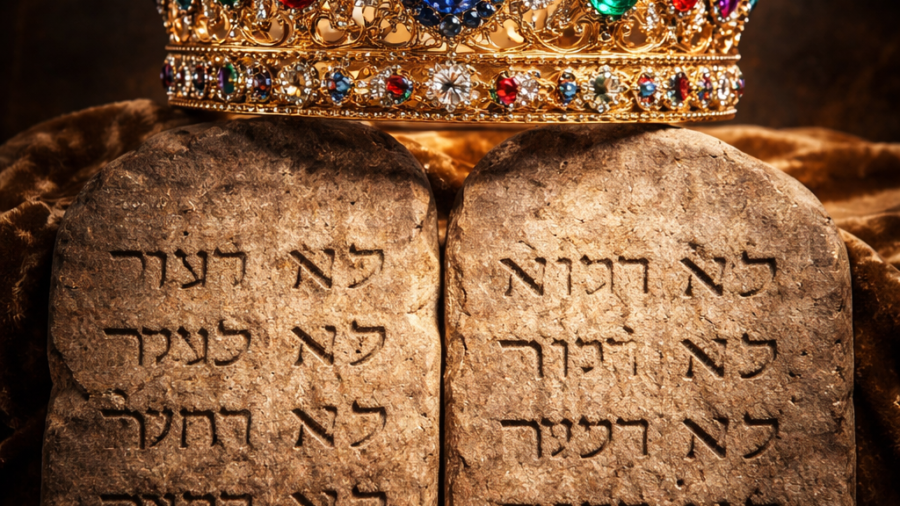

ChatGPT Image Jan 22, 2026, 03_50_53 PM

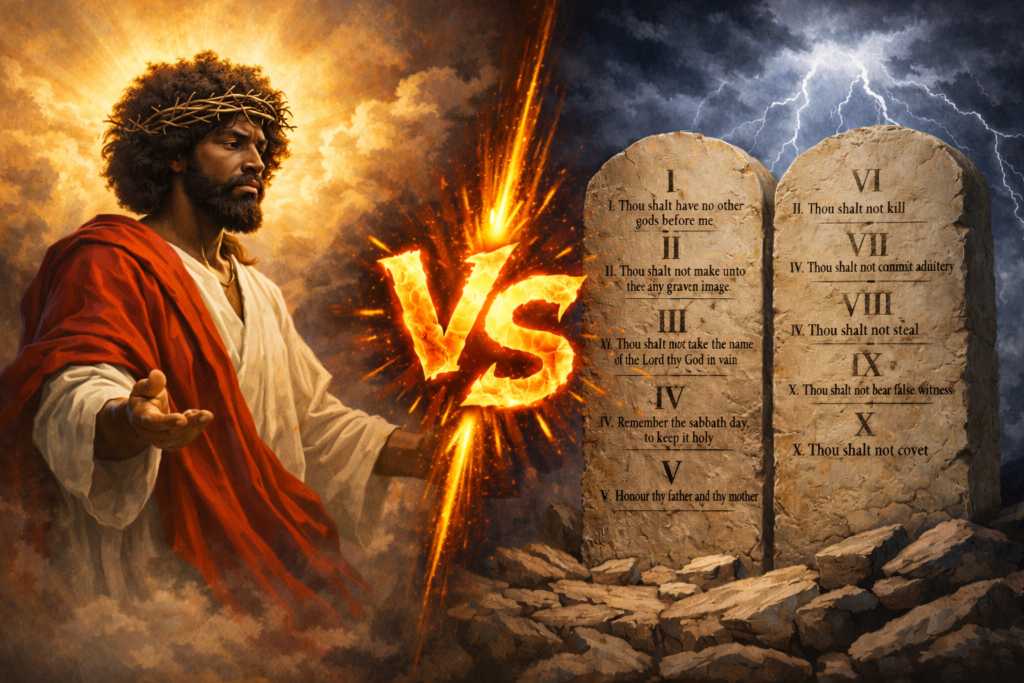
Torah as the Supreme

Torah as the Supreme Measure (לִמְדוֹד)


Introduction:

Within the Scriptures of Israel, the Torah and the Prophets establish an unchanging standard by which all claims to divine authority must be measured. Yahuwah Himself declares, “I do not change” (Malachi 3:6), and because He does not change, His Law—given through Moses—stands as the eternal benchmark of truth, righteousness, and prophetic legitimacy (Deuteronomy 4:2; Psalm 19:7). The Torah is not a cultural artifact or a preliminary draft of faith; it is the measuring rod. Anyone who claims to speak for Yahuwah—whether prophet, priest, or king—must align fully and literally with what has already been written.

This study examines Jesus of Nazareth through that Torah-based lens. It does not begin with church creeds, later theological developments, or inherited assumptions. Instead, it asks a more fundamental question: when evaluated strictly according to the Law and the Prophets, does Jesus meet the biblical requirements of a true prophet and Messiah? The issue is not whether he was sincere, influential, or revered, but whether his words and claims withstand the test Yahuwah Himself established.

That test is stated plainly in Deuteronomy 18:20–22:

“When a prophet speaks in the name of Yahuwah, if the thing does not come to pass or come true, that is the thing which Yahuwah has not spoken; the prophet has spoken it presumptuously; you shall not fear him.”

The Torah leaves no room for exceptions. A single failed prophecy—especially a time-bound one—invalidates the claim of divine sending.


The Promise of an Imminent Return and the Passing of a Generation

According to the Gospel narratives, Jesus repeatedly spoke of an imminent conclusion to his mission. Statements attributed to him include declarations that “this generation shall not pass away” before all things were fulfilled, and assurances that some standing before him would not taste death before seeing the kingdom established.

These are not vague or symbolic claims. They are time-bound prophecies tied explicitly to the lifespan of a specific generation. In the Hebrew Scriptures, such language is never elastic. When Jonah warned Nineveh, the timeframe was literal. When Jeremiah spoke of seventy years of exile, the count was exact. Biblical prophecy does not retroactively redefine its terms when expectations fail.

Yet the generation to whom these words were allegedly spoken passed away nearly two thousand years ago. The promised return, restoration, and kingdom did not occur. In response, later theology has offered a series of adjustments—redefining the meaning of “generation,” spiritualizing fulfillment, or postponing the event indefinitely. None of these solutions exist within the Torah’s prophetic framework. The Law provides no mechanism for reinterpretation after failure.

Measured by Deuteronomy 18, a prophecy that does not occur as spoken is not from Yahuwah.


The “Third Day” Resurrection and the Precision of Time

Another central claim attributed to Jesus is that he would be raised on the third day after his death. Here again, the Torah demands precision. From the opening chapter of Genesis, a day is defined by “evening and morning.” Time in Scripture is not fluid; it is counted.

According to the Gospel accounts, Jesus is said to have died late on the preparation day, been placed in the tomb shortly before sunset, and discovered risen early on the first day of the week. By biblical reckoning, this accounts for one night and parts of two days—not three full days and three nights.

This distinction matters because Jesus is also said to have pointed to Jonah as the sign of his authenticity: “three days and three nights.” Jonah 1:17 states this plainly and literally. Partial days do not become full days by theological necessity. The Torah does not allow time to be symbolically inflated to preserve a claim.

Attempts to resolve this discrepancy—whether through inclusive counting, alternative calendars, or symbolic interpretations—again rely on post-event adjustments rather than the definitions established in the Law. If the sign does not match the literal statement, then the sign fails.


Multiple Returns and the Absence of Torah Precedent

The Torah and the Prophets consistently describe a single, decisive intervention by Yahuwah through His anointed—an act marked by restoration, justice, and righteous rule. Isaiah speaks of nations streaming to Zion to learn Torah. Ezekiel describes the regathering and revival of Israel. Peace, knowledge, and obedience define the age of deliverance.

In contrast, later Christian theology introduces a complex and fragmented sequence of departures and returns in order to account for unfulfilled expectations. The narrative requires Jesus to come first as a baby, ascend after his resurrection, ascend again before the disciples, return secretly to remove believers, return openly to rule for a thousand years, depart once more while Satan is released, and then return again to rule permanently.

This structure demands multiple comings and goings—five or six in total—none of which are outlined in the Torah or the Prophets. Scripture never portrays the Messiah as repeatedly ascending and descending to correct earlier outcomes or complete deferred objectives. The need for repeated returns is itself evidence that the original claims did not come to pass as spoken.


The Unfulfilled Promise of Restoration

When the Prophets describe Yahuwah’s deliverance, the results are unmistakable. The nations learn His Law. Israel is gathered and restored. War gives way to peace. The knowledge of Yahuwah fills the earth as waters cover the sea.

The claim that Jesus must return “a second time” to accomplish these things implicitly admits that they were not accomplished the first time. Yet the Torah does not recognize partial or postponed messianic fulfillment. When Yahuwah delivers, He delivers fully and decisively. A Messiah who must leave, fail to restore, and promise future correction does not align with the prophetic pattern established in the Hebrew Scriptures.


The Torah’s Verdict on Failed Prophecy

The Law is unambiguous. A true prophet speaks only what Yahuwah commands, and what Yahuwah commands comes to pass exactly as spoken. Failure disqualifies the messenger, regardless of sincerity, popularity, or perceived spiritual impact.

Deuteronomy 13 goes even further, warning that even if signs or wonders occur, a prophet who leads the people away from the commandments of Yahuwah is to be rejected. Emotional attachment, tradition, and institutional authority carry no weight against the written standard.


Conclusion: According to What Is Written

When Jesus is evaluated strictly according to the Torah and the Prophets, several conclusions emerge. His time-bound prophecies did not occur. His stated signs do not align with literal fulfillment. His mission requires repeated future revisions to remain credible. His narrative depends on doctrines absent from the Law of Moses.

By the measure Yahuwah Himself established, such a figure cannot be validated as a prophet sent by Him. The Torah concludes the matter plainly:

“You shall not fear him.”

Faithfulness to Yahuwah requires allegiance not to evolving theology, but to what is written—to the eternal Law that does not change, and to the prophetic standard that cannot fail.

ChatGPT Image Jan 22, 2026, 04_20_12 PM

Defining God According to the Torah

Defining God According To The Torah

Psalm 138:2

Testing the Claim That Jesus Was 100% God and 100% Man


Introduction

One of the most defining claims of later Christian theology is that Jesus of Nazareth was both fully God and fully man at the same time. This doctrine—formalized centuries after the first century—asserts that the eternal, immutable God of Israel entered into corruptible human flesh without ceasing to be fully divine. While this idea has become foundational within Christian orthodoxy, it does not originate in the Torah, nor is it framed in the language of Moses or the Prophets.

If Yahuwah has already revealed who He is, how He exists, and what is possible within His nature, then any later claim about God must be tested against that revelation. The Torah is not silent on the nature of God. It defines Him with clarity, precision, and consistency. This study therefore examines the claim of Jesus’ full divinity not through creeds or philosophical abstractions, but through the Torah itself—the original standard Yahuwah gave to Israel.

When the portrayal of Jesus in the New Testament is carefully examined and measured against the Torah’s definition of God, serious and irreconcilable contradictions emerge.


The Nature of God According to the Torah

The Torah presents Yahuwah as eternal, self-existent, and unchanging. When He reveals Himself to Moses, He does not describe a being who evolves or adapts. He declares, “I AM WHO I AM” (Exodus 3:14), identifying Himself as absolute existence. This name is not a title of role, but a statement of nature. Yahuwah does not become; He simply is.

Moses later affirms this truth when he declares, “The eternal God is your dwelling place” (Deuteronomy 33:27). Eternity, in the Torah, is not a quality that can be suspended or entered into temporarily. It defines who God is. To move from infinite to finite, from immortal to mortal, or from all-knowing to limited would constitute a change in nature—something the Torah explicitly rejects.

Closely tied to this is the Torah’s teaching about God’s holiness and glory. Yahuwah tells Moses, “You cannot see My face, for no man shall see Me and live” (Exodus 33:20). Even Moses, who spoke with God more intimately than any other prophet, could not endure the fullness of Yahuwah’s presence. This establishes a firm boundary between the infinite holiness of God and the frailty of human flesh.

For this reason, the Torah repeatedly warns Israel not to imagine God in physical form. “You saw no form,” Moses reminds the people, “lest you act corruptly” (Deuteronomy 4:15–16). God’s self-revelation deliberately excludes embodiment. The idea that the fullness of Yahuwah could permanently dwell within corruptible human flesh runs directly against these foundational principles.


Limited Knowledge and the Question of Omniscience

Another defining attribute of Yahuwah in the Torah is complete knowledge. He declares the end from the beginning and speaks with absolute certainty about what will come to pass. Nothing is hidden from Him.

Against this backdrop, the New Testament presents a striking admission from Jesus himself. Speaking about the timing of future events, he states that no one knows the day or the hour—not the angels, and “not even the Son, but the Father only” (Matthew 24:36; Mark 13:32).

This admission cannot be dismissed lightly. According to the Torah, Yahuwah does not possess partial knowledge. A being who lacks information known to another is, by definition, not fully God. If Jesus did not know what the Father knew, then by Torah standards, he cannot share the same divine nature.


The Crucifixion and the Inviolability of God

The Torah consistently presents Yahuwah as sovereign over life and death. “I kill and I make alive,” He declares in Deuteronomy 32:39. He is never depicted as vulnerable, overpowered, or subject to human authority. Yahuwah does not stand trial before men; men stand before Him.

Yet the New Testament records that Jesus was arrested, beaten, mocked, and executed by human authorities. He is bound, struck, and nailed to wood. If Jesus is claimed to be Yahuwah Himself, this narrative presents a profound theological problem. The God of the Torah cannot be restrained by ropes, struck by soldiers, or executed by finite creatures.

To suggest that Yahuwah submitted Himself to human violence requires a complete redefinition of who Yahuwah is—one that finds no support in the Torah.


The Death of an Eternal God

The Torah does not contain the concept of a dying God. Yahuwah declares, “I live forever” (Deuteronomy 32:40). Death is the fate of created beings, not the uncreated Creator. An eternal God cannot cease to live, even temporarily, without ceasing to be eternal.

If God truly died, even for a moment, the implications are staggering. Creation would be without a sustaining Creator. Eternity would have an interruption. The One who declares Himself everlasting would, for a time, not exist. These conclusions are not merely uncomfortable—they are incompatible with Torah theology.


Contrasting the Torah’s God with the New Testament Portrait

When the Torah’s description of Yahuwah is placed alongside the New Testament’s portrayal of Jesus, the differences become unmistakable. The God of the Torah cannot be seen and lived; Jesus is seen, touched, and handled. Yahuwah possesses all knowledge; Jesus lacks knowledge. Yahuwah does not change; Jesus grows in wisdom. Yahuwah depends on no one; Jesus prays. Yahuwah lives forever; Jesus dies and is buried.

These are not minor distinctions. They describe fundamentally different categories of being.


“God Is Not a Man”

Perhaps most decisive is Yahuwah’s own testimony concerning His nature. Through Balaam, He declares, “God is not a man, that He should lie, nor the son of man, that He should repent” (Numbers 23:19). This statement is not metaphorical. It is ontological. Yahuwah explicitly distinguishes Himself from humanity.

To later assert that God became a man is to contradict His own declaration about who He is.


Conclusion

When the claim that Jesus was 100% God and 100% man is tested against the Torah, it collapses under the weight of Scripture. The Torah defines Yahuwah as immutable, omniscient, inviolable, eternal, and wholly distinct from corruptible flesh. The New Testament portrayal of Jesus, however, presents a figure who grows, learns, prays, suffers, and dies.

These traits describe a human servant of God—not Yahuwah Himself.

Measured by the Torah’s unchanging standard, the conclusion is unavoidable: Jesus, as described in the New Testament, cannot be the eternal God of Israel and therefore could not have been both fully God and fully man at the same time.


Waking up the Remnant

Set my People Free

Lorem ipsum dolor sit amet, consectetur adipiscing elit. Mauris in porttitor dui. Donec non blandit tellus. Aenean iaculis tristique eros ut mollis. Interdum et malesuada fames ac ante ipsum primis in faucibus. Sed id venenatis est. Etiam vitae sem quis eros lobortis bibendum sed ut nibh. Duis convallis mi in placerat pharetra. Duis nec ipsum blandit, finibus justo ut, maximus sapien. Proin fringilla, tellus non aliquam imperdiet, ante nulla ultricies ligula, hendrerit tincidunt justo nisl vel neque. Cras iaculis, magna sit amet rhoncus tempus, nulla lorem elementum nunc, eget posuere erat dui nec lectus. In dapibus tellus eget elit fermentum, vel dictum nibh efficitur. In eu tempus lorem.

Nulla sed interdum dui. Mauris scelerisque nec lorem quis porta. Ut mollis mi tempor commodo cursus. Pellentesque finibus tortor ac nunc lobortis vestibulum. Sed pellentesque sapien eget felis pulvinar, quis accumsan orci maximus. Nullam ac varius leo, eu maximus leo. Phasellus vestibulum ullamcorper ipsum egestas aliquam. Nullam sit amet risus tristique, ullamcorper ante et, ultricies neque. Morbi finibus arcu nec ex gravida, ut euismod leo feugiat. Mauris sollicitudin fringilla neque, at vestibulum magna auctor nec. Pellentesque dui lectus, accumsan in aliquet sed, tincidunt nec leo.

Quisque odio magna, pretium vel elit ac, convallis gravida ligula. Sed tempor dolor dolor. Mauris venenatis neque non nulla dapibus, vitae tristique ante iaculis.

Nulla sed interdum dui. Mauris scelerisque nec lorem quis porta. Ut mollis mi tempor commodo cursus. Pellentesque finibus tortor ac nunc lobortis vestibulum

Nulla sed interdum dui. Mauris scelerisque nec lorem quis porta. Ut mollis mi tempor commodo cursus. Pellentesque finibus tortor ac nunc lobortis vestibulum. Sed pellentesque sapien eget felis pulvinar, quis accumsan orci maximus. Nullam ac varius leo, eu maximus leo. Phasellus vestibulum ullamcorper ipsum egestas aliquam. Nullam sit amet risus tristique, ullamcorper ante et, ultricies neque. Morbi finibus arcu nec ex gravida, ut euismod leo feugiat. Mauris sollicitudin fringilla neque, at vestibulum magna auctor nec. Pellentesque dui lectus, accumsan in aliquet sed, tincidunt nec leo

Nulla sed interdum dui. Mauris scelerisque nec lorem quis porta. Ut mollis mi tempor commodo cursus. Pellentesque finibus tortor ac nunc lobortis vestibulum. Sed pellentesque sapien eget felis pulvinar, quis accumsan orci maximus. Nullam ac varius leo, eu maximus leo. Phasellus vestibulum ullamcorper ipsum egestas aliquam. Nullam sit amet risus tristique, ullamcorper ante et, ultricies neque. Morbi finibus arcu nec ex gravida, ut euismod leo feugiat. Mauris sollicitudin fringilla neque, at vestibulum magna auctor nec. Pellentesque dui lectus, accumsan in aliquet sed, tincidunt nec leo.

Nulla sed interdum dui. Mauris scelerisque nec lorem quis porta. Ut mollis mi tempor commodo cursus. Pellentesque finibus tortor ac nunc lobortis vestibulum. Sed pellentesque sapien eget felis pulvinar, quis accumsan orci maximus. Nullam ac varius leo, eu maximus leo. Phasellus vestibulum ullamcorper ipsum egestas aliquam. Nullam sit amet risus tristique, ullamcorper ante et, ultricies neque